
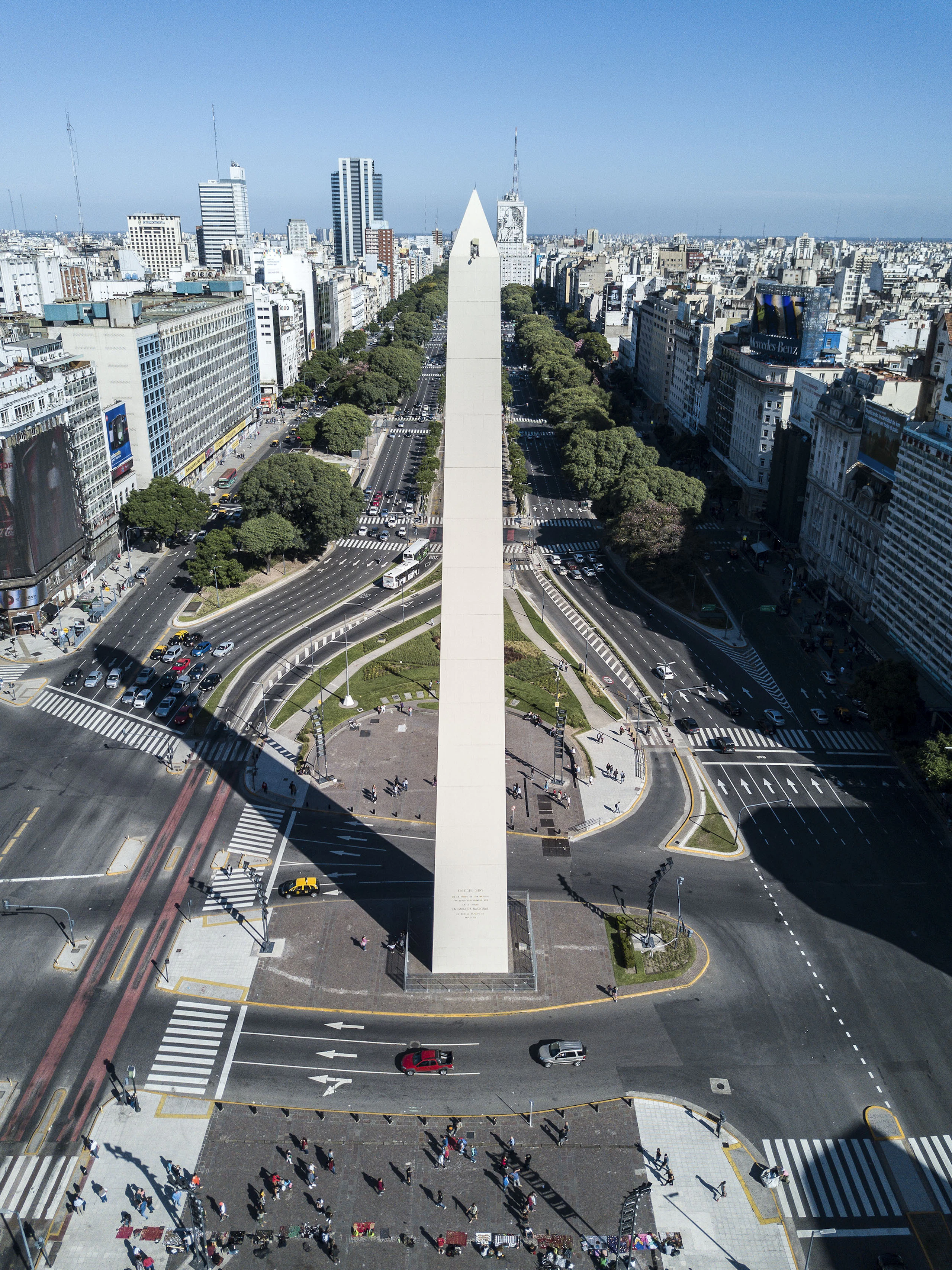
Getting around the city
Buenos Aires is a city for exploring on foot, one neighbourhood at a time, but the distances between them are long. The underground, buses and taxis are cheap and take you everywhere.
🚇 Subte (underground)
Six lines (A, B, C, D, E and H) plus the Premetro light rail. The most useful for visitors is line D, which links the centre with Recoleta and Palermo. It runs from around 5:30 am to 11:30 pm and opens later on Sundays.
| How you pay | Price per journey |
|---|---|
| Contactless bank card or phone | ARS 1,887 (≈ US$1.20) |
| Unregistered SUBE card | around ARS 2,600 (≈ US$1.70) |
You can pay by tapping your contactless Visa or Mastercard, phone or watch at the gate. It is the easiest and cheapest option for visitors.
🚌 Colectivos (buses)
More than 100 routes cover the whole city, many of them 24 hours a day. Raise your hand to stop one. A short journey costs ARS 1,520 (≈ US$1) with an unregistered SUBE card.
Only some routes accept contactless bank cards; on the rest you need a SUBE card. Cash is not accepted.
💳 SUBE card
The rechargeable public transport card. You can buy one at kiosks displaying the SUBE sign, at some underground stations and at SUBE customer centres, and top it up at stations, kiosks and automatic machines. It costs a few dollars and works on buses, the underground and trains.
🚕 Taxis and apps
Taxis are black with a yellow roof and use a meter. The flag fare is around ARS 2,000–2,600 (≈ US$1.30–1.70) by day, and a ride around the centre or between nearby neighbourhoods costs roughly ARS 6,000–10,000 (≈ US$4–6.50). Night fares are 20% higher. Uber, Cabify and DiDi work very well and are usually a little cheaper.
🚲 Cycling
The city has more than 300 km of cycle lanes and is almost flat. The Ecobici app sells passes for foreign visitors so you can use the public bikes. Ideal for Palermo, Puerto Madero and the riverside.
AI planner
Ready to plan your trip to Buenos Aires?
Generate your custom itinerary in minutes.