

In 30 seconds
- The Bernina Express crosses the Alps from Chur (Switzerland) to Tirano (Italy) in about 4 hours, over a 2,253 m pass with no rack-and-pinion track.
- The line has been a UNESCO World Heritage Site since 2008.
- The Chur–Tirano journey costs 106 CHF (≈ $133 USD) in 2nd class, mandatory seat reservation included.
- There's a cheaper alternative: the regional train runs exactly the same route for 66 CHF (≈ $83 USD), no reservation needed, with windows that open.
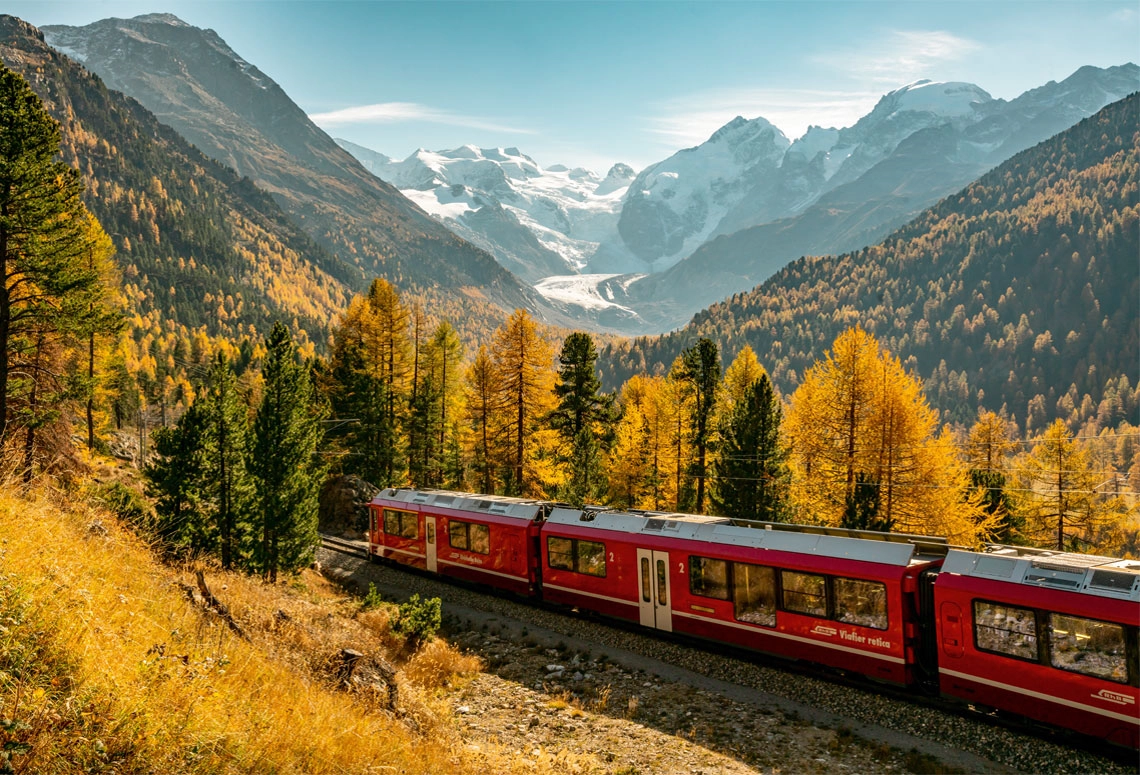
- The best time to go, if you can choose: mid-September to mid-October.
This isn't just a train ride. It's the Bernina Express, and it's probably one of those experiences you need to have at least once in your life.
Picture boarding a train in the morning surrounded by the Swiss Alps and ending the day among palm trees in Italy. In between: glaciers, lakes of an impossible blue, and viaducts that look like they're straight out of a film.
In this article we'll tell you everything you need to know to experience it, plus a cheaper alternative that's just as impressive.
The route, stop by stop
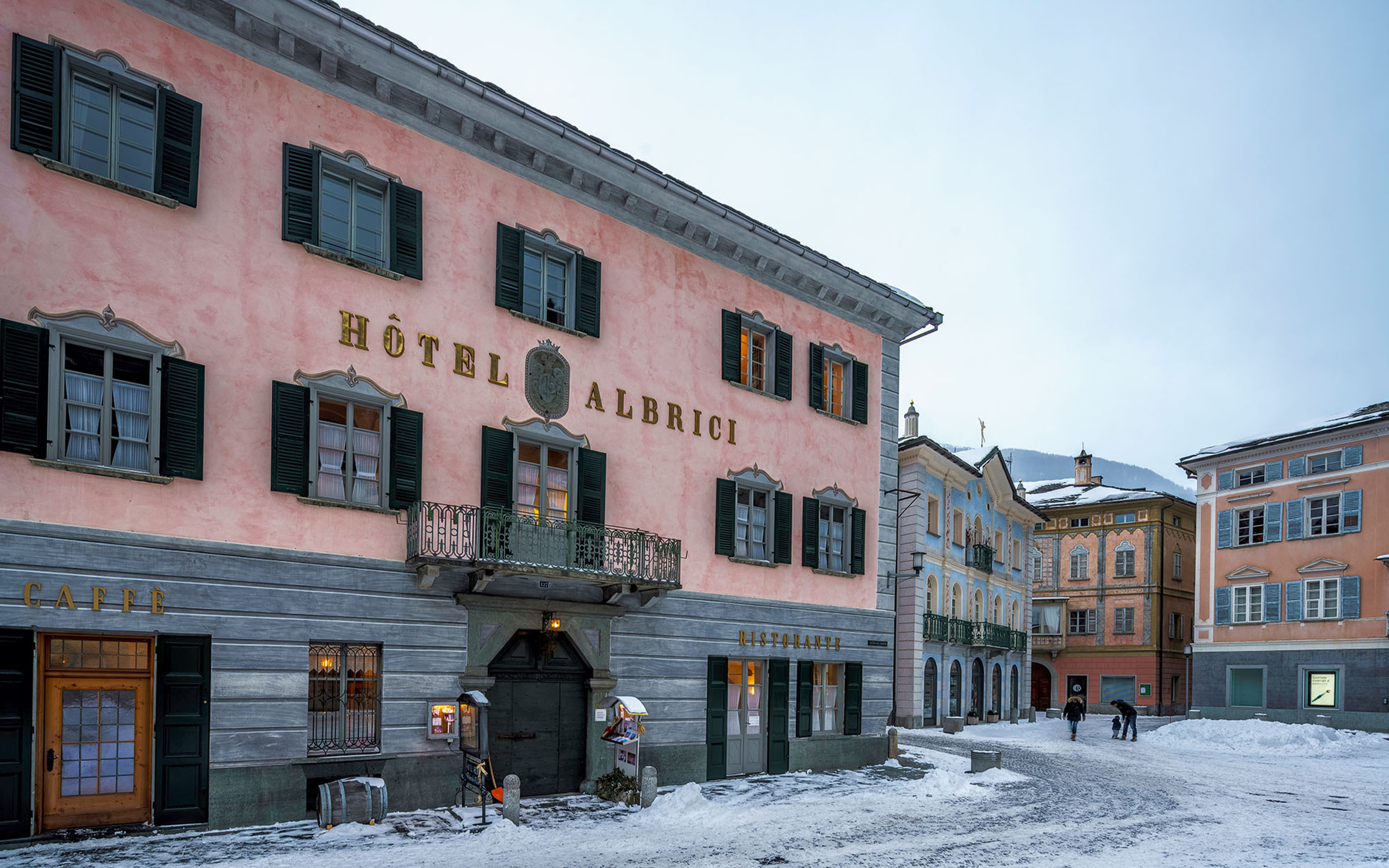
From Chur to Tirano, the train links two Rhätische Bahn lines: first the Albula line, with its viaducts and spiral tunnels through forests and valleys, then the Bernina line, which climbs — with no rack-and-pinion track — to the pass that shares its name before descending south. In about 4 hours and 122 km, the route climbs and drops more than 1,800 metres in elevation, crosses 55 tunnels and 196 bridges, and shifts language and landscape three times: from German to Romansh to Italian, from alpine snow to Mediterranean vineyards.
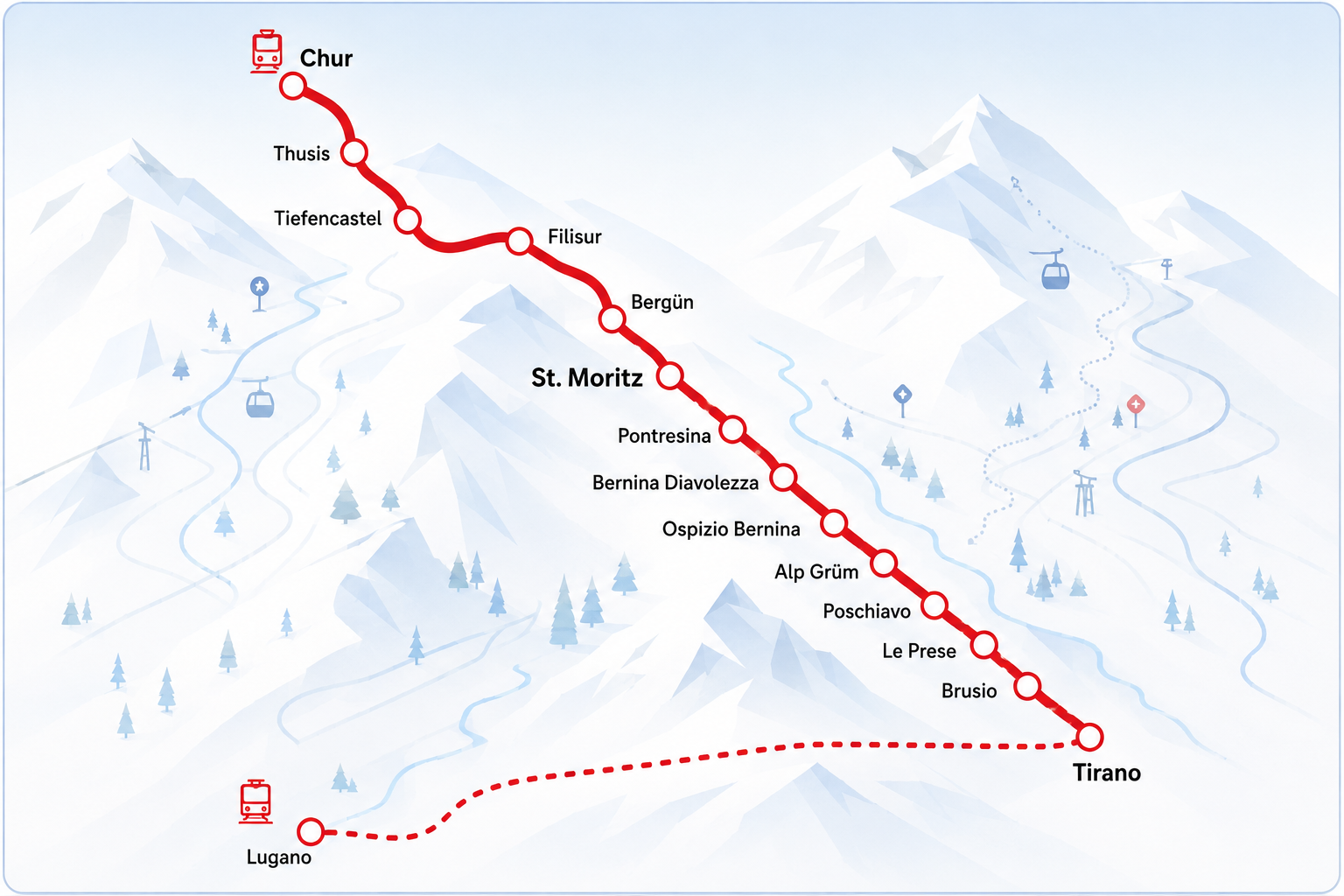
These are the five moments that justify the ticket:
Swipe to follow the route →
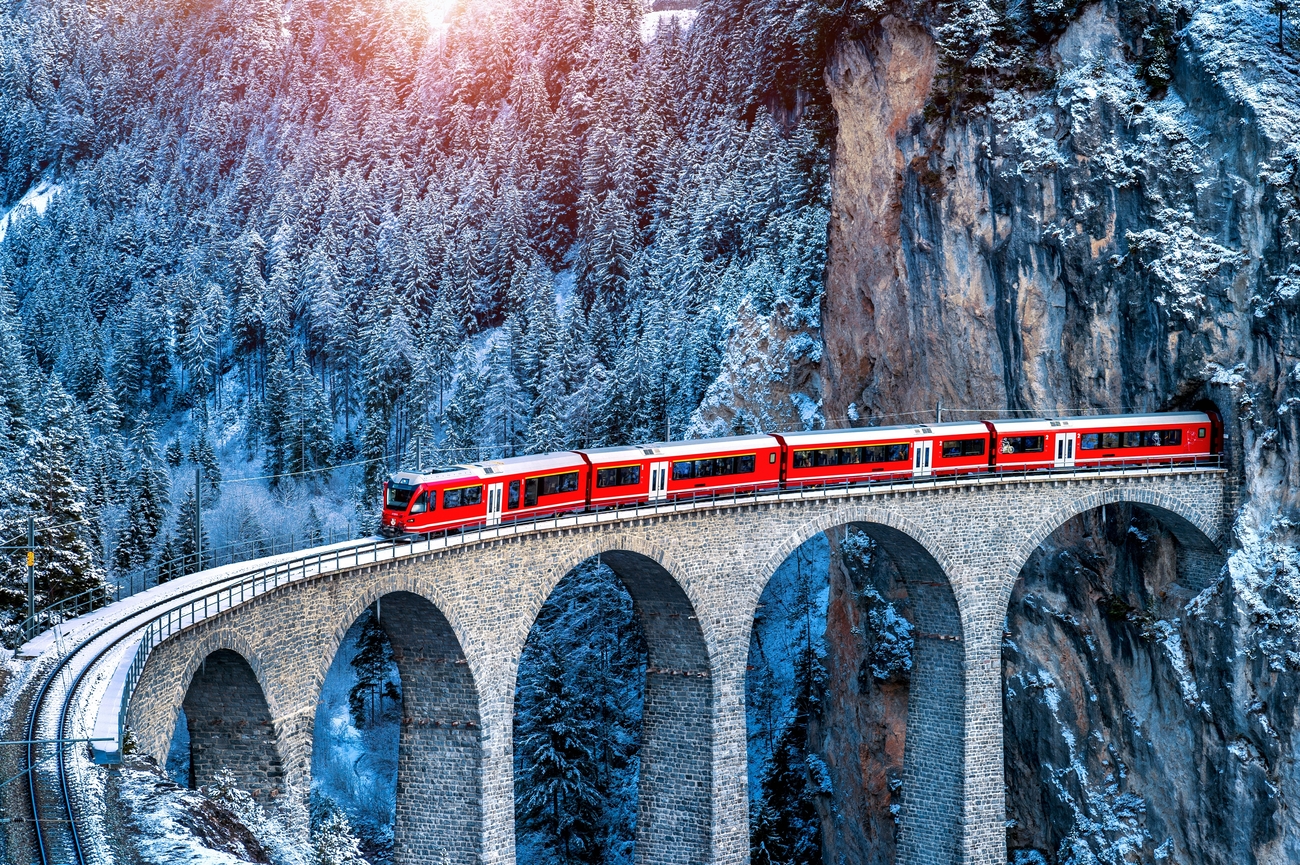
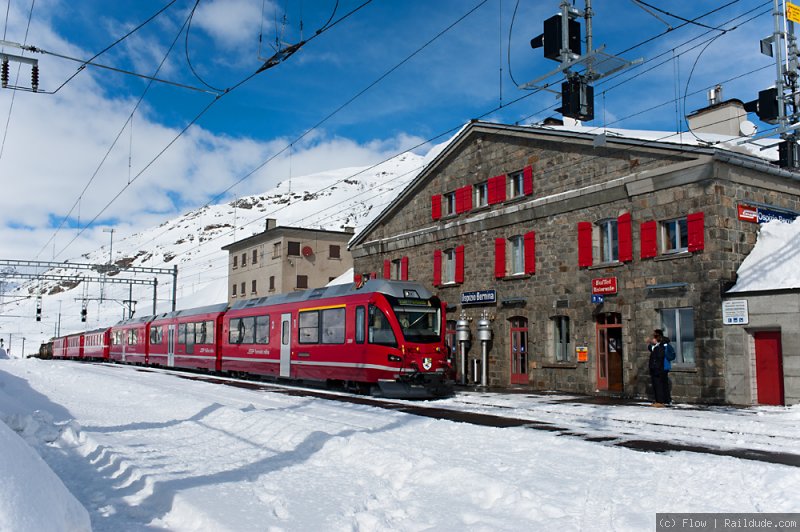
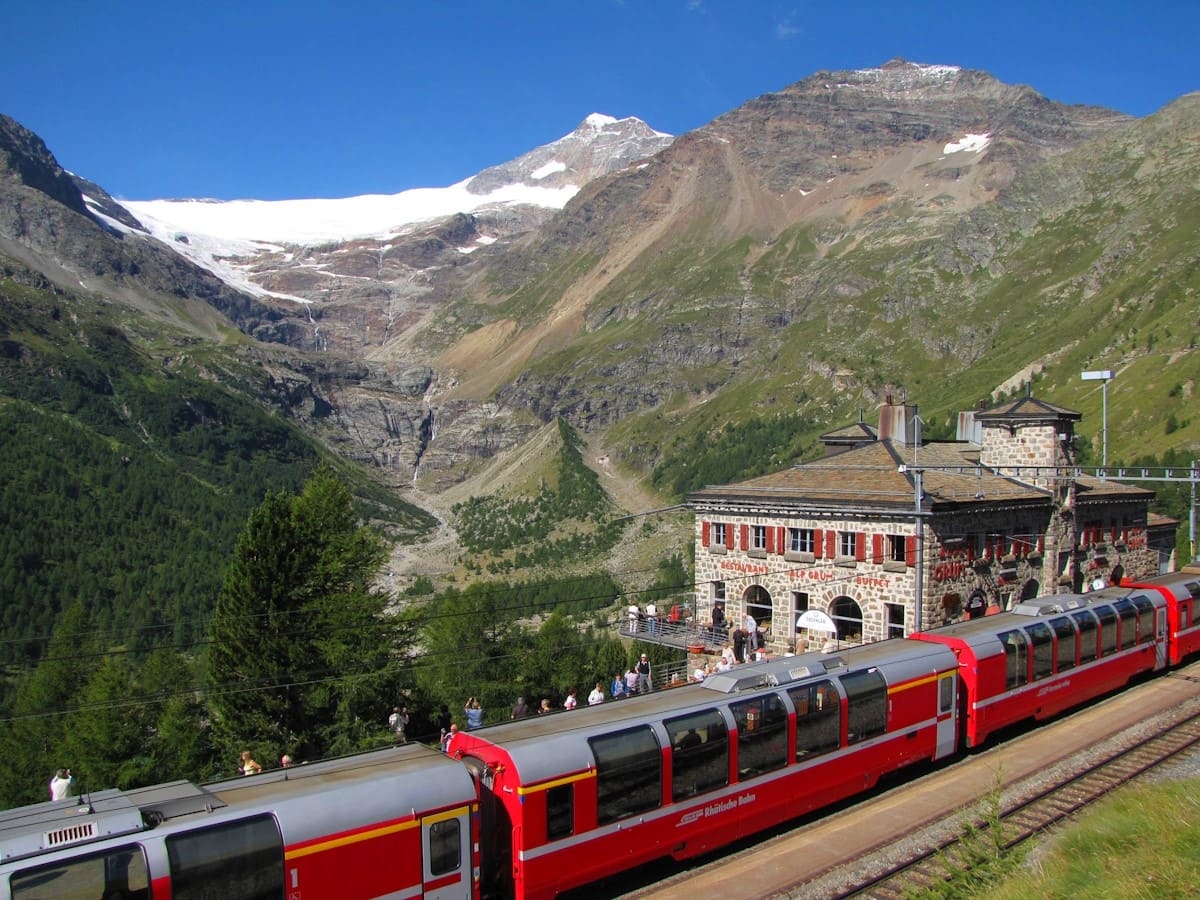

2026 notice: the Vereina diversion
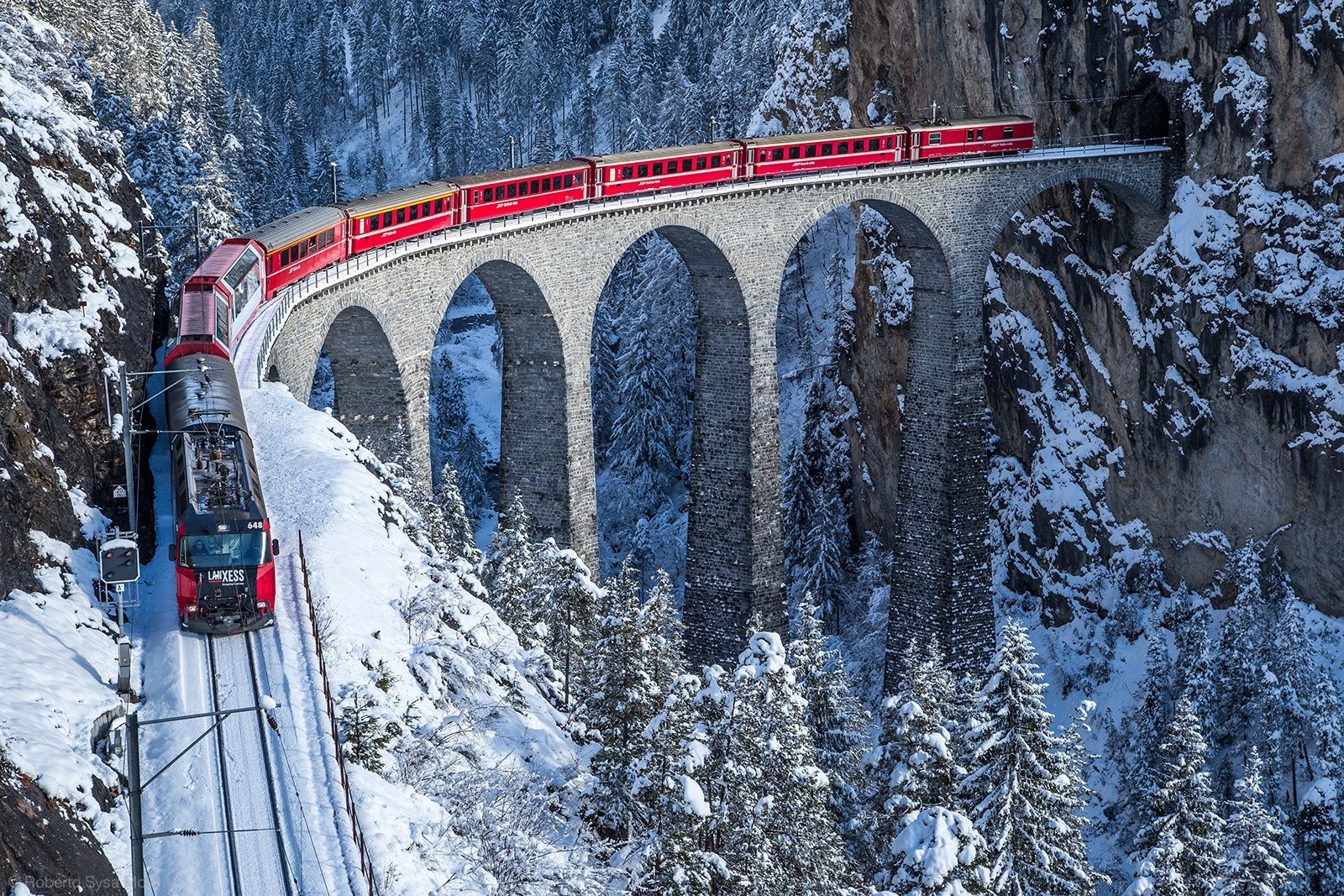
From 29 October to 13 November 2026, due to construction work, Bernina Express panoramic trains will not pass over the Landwasser Viaduct.
If you're travelling during that window and want to see the full historic route, take the regional train between Tirano and St. Moritz, which isn't diverted.
The Bernina Express: what it is and what it costs
This is the flagship train: carriages with curved windows that stretch up to the ceiling, numbered seating, WiFi, screens with route information and at-seat service. It runs the route in one go, with short technical stops, and in summer it can run up to three departures a day.
What you pay for is two separate things
A trip on this line is made up of two separate charges, and mixing them up is exactly why people think the train costs twice what it actually does:
- The journey fare. This is the price of getting from A to B. It's the same on the panoramic and the regional train: 66 CHF (≈ $83 USD) from Chur to Tirano in 2nd class, whichever train you take.
- The seat reservation. This only exists on the panoramic train, it's mandatory, it's charged per person, per journey, and it's non-refundable. It's what you're paying for the panoramic carriage and the on-board service.
Chur → Tirano4 h
+
=
Official Rhätische Bahn website
Buy at rhb.chTransport passes
If you'd also like to see more of Switzerland beyond the Bernina, we recommend the Swiss Travel Pass: unlimited travel by train, bus and boat across the whole Swiss network, free entry to more than 500 museums, and discounts on cable cars and funiculars.
The Bernina Express is included (you only pay the seat reservation): on the regional train you ride for free, no paperwork.
If you have the Swiss Travel Pass and you're travelling with a child aged 6 to 15, you can get the Swiss Family Card for free so they travel at no cost.
Book the Swiss Travel PassFrom Milan, an all-inclusive option
If you're in Milan and want to experience the Bernina Express without organising anything yourself, this full-day excursion takes care of everything: round-trip transport, a guide and everything you need included, no hassle.
Book the excursion from MilanWhen to go
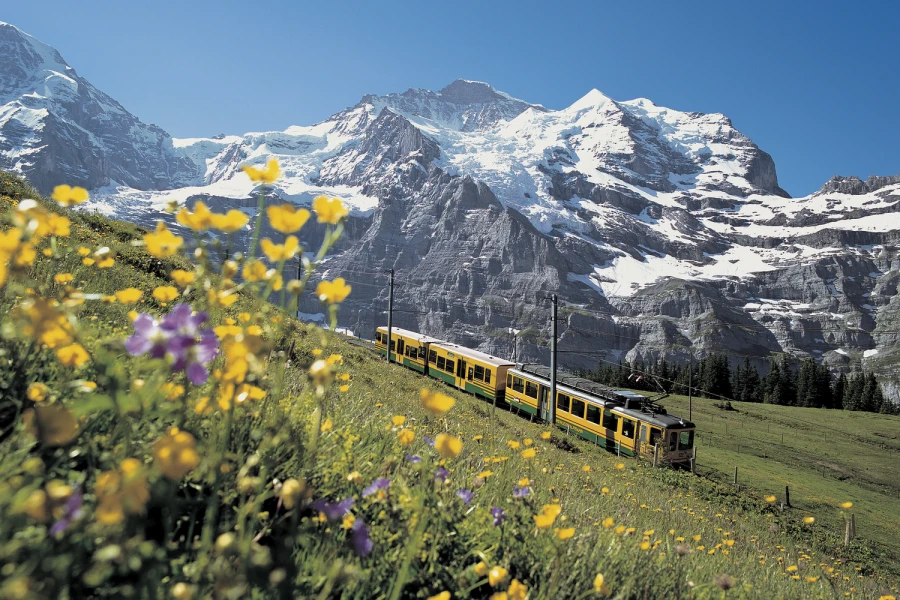
The line runs all year round: it's one of the very few alpine routes that never closes for winter. So the question isn't when to go, but which version of the route you want to see, because it's four completely different landscapes.
Swipe to see all four seasons →

The budget alternative: the regional train
One line, two trains
The company that runs all of this is called the Rhätische Bahn (RhB, the "Rhaetian Railway"): it's the regional railway of the Swiss canton. The RhB isn't a tourism company — it's the local public transport.
The Bernina Express isn't a line, it's a specific train
In other words: riding the Bernina route and taking the Bernina Express are not the same thing. You can see exactly the same scenery on a regional train that costs a lot less.
The regional train: what it is and what it costs
The RhB's regional trains are the everyday ones: standard carriages, unnumbered seats, windows that open, and departures roughly every hour. They run exactly the same route, stop at every station, and require no reservation — you just get on.
Chur → Tirano4 h
+
=
The trade-off is there's no on-board service. In exchange you gain something the panoramic train doesn't offer: you can get off wherever you want and continue an hour later.
The comparison, at a glance
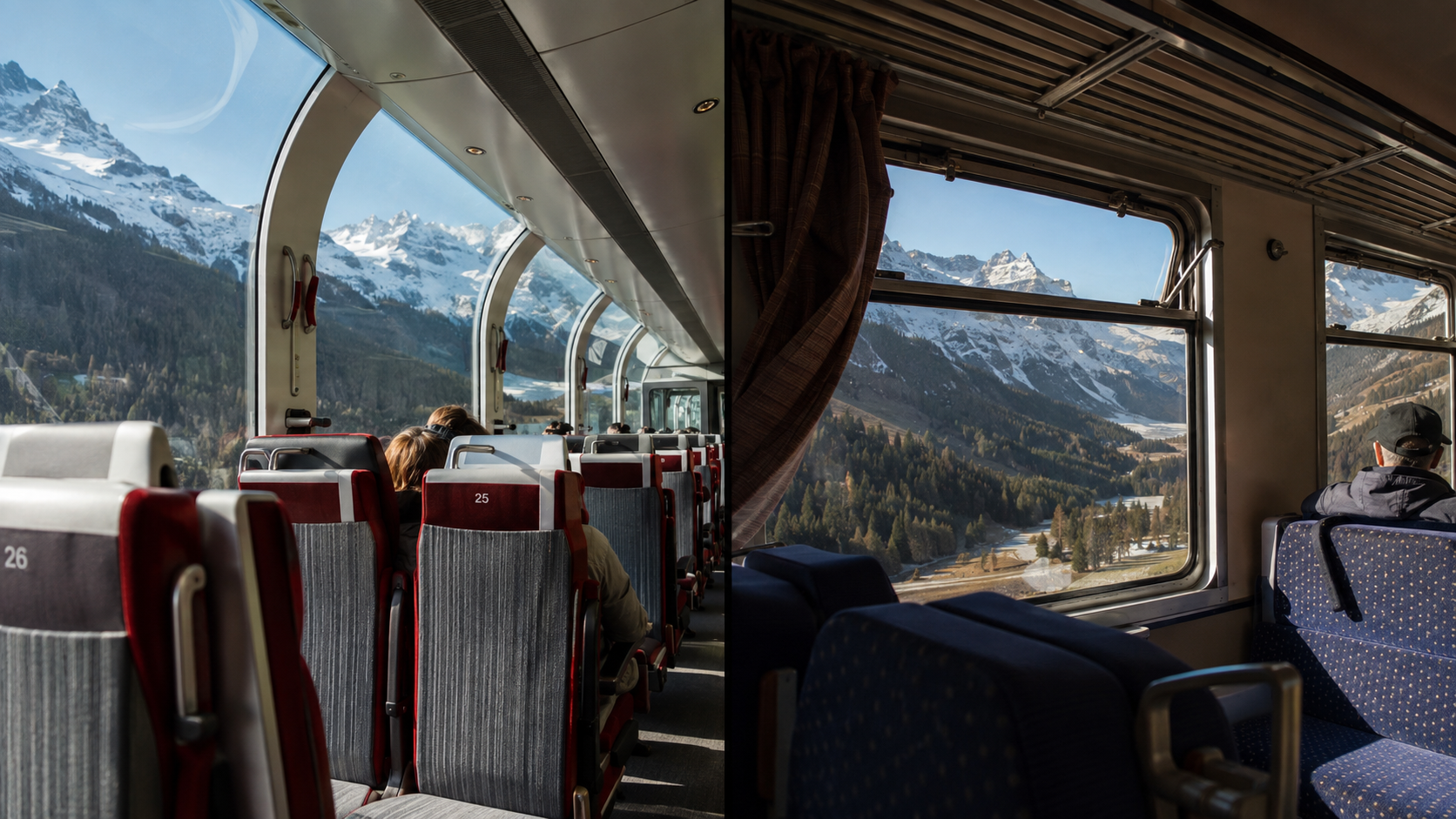
Take the panoramic train if…
You're travelling in high season and need a guaranteed seat, you have reduced mobility, or you want the trip fully sorted from start to finish with on-board service.
Take the regional train if…
You're there to take photos, want to get off at Alp Grüm or Brusio and continue an hour later, you're travelling with a pass that covers the ticket, or you'd rather spend the money on something else.
★ Editor's recommendation
The best combination is not choosing at all: panoramic one way, regional the other. You book a seat for the outbound leg and come back stopping wherever you like.
The Photo Coach, for those coming to shoot photos
Some regional trains carry a photo carriage at the end of the consist, with windows that drop all the way down and no seats: you step in, shoot, and go back to your seat. It's marked with the symbol FW in the timetable. Look for it when planning your connection — not every service carries it.
In summer, the RhB also attaches its open panoramic carriages (Aussichtswagen) to some services — wooden benches literally in the open air — between St. Moritz and Tirano. Confirm the exact dates and timetables before counting on it.
Tips that make a real difference
Which side to sit on
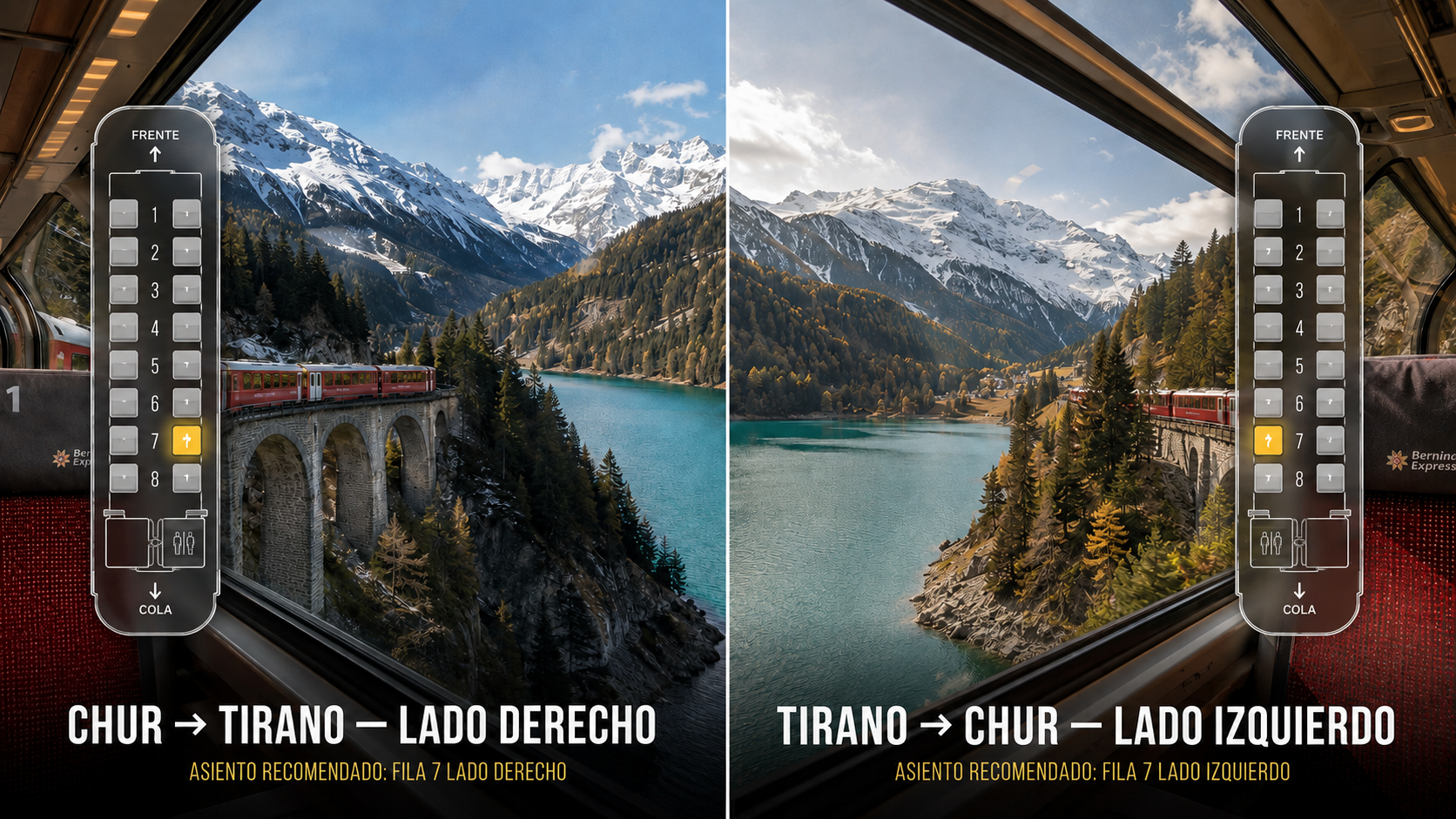
On the regional train seats aren't numbered, so arrive with time to spare if you're travelling in high season: in July and August the Tirano–St. Moritz stretch fills up and you could end up standing. Groups of more than two need to be especially punctual to sit together.
The onion effect
You can leave Tirano at 25°C and hit freezing wind at Ospizio Bernina. That's 1,800 metres of elevation change in two hours. Layer up: a t-shirt, a fleece, a windbreaker within reach, and if you're getting off at the top, a hat and gloves even in August.
Eat better, and cheaper
On the panoramic train there's a catering trolley, and a coffee runs about 6.50 CHF (≈ $8 USD). On the regional there's no service, and that has its upside: buy bread, cheese and a bottle of local wine in Tirano or Chur, and have breakfast facing the glacier.
Before you leave home
- Dates chosen and checked against the Vereina diversion (29 Oct – 13 Nov 2026)
- Train decided — panoramic, regional, or one each way — and reservation made if riding the panoramic
- SBB app installed to check connections and platforms in real time
- Valid passport or ID: there's a border between Switzerland and Italy
- Layered clothing for 2,253 m, whatever the month, and a charged power bank (the cold drains your phone)
- Picnic bought in Tirano or Chur, and extra time on the platform if you're carrying large luggage
Few routes in Europe pack this much into a single ticket. Pick the month, pick the train, pick the side of the carriage, and let the line do the rest.
Data verified in August 2026 with Rhätische Bahn (rhb.ch), SBB, Seat61, MySwissAlps and Trenord. USD amounts are an approximate conversion at 1 CHF ≈ $1.25 USD. German and Italian tickets are sold in euros, so their franc figures are approximate too. Swiss prices and construction schedules change — always confirm in the SBB app before buying.